
How official sources define it
COMNAVAIRFORINST 1542.7E, Enclosure (2), defines Decision Making as “the ability to choose a course of action using logical and sound judgment based on available information.”
The FAA’s Pilot’s Handbook of Aeronautical Knowledge (FAA-H-8083-25B) describes the DECIDE model: “Detect, Estimate, Choose a course of action, Identify solutions, Do the necessary actions, and Evaluate the effects of the actions,” which it calls a “continuous loop process.”
FAA Advisory Circular 120-51E, Appendix 1, lists as behavioral markers: “Operational decisions are clearly stated to other crewmembers” and “Crewmembers acknowledge their understanding of decisions.”
Air Florida Flight 90 (January 13, 1982)
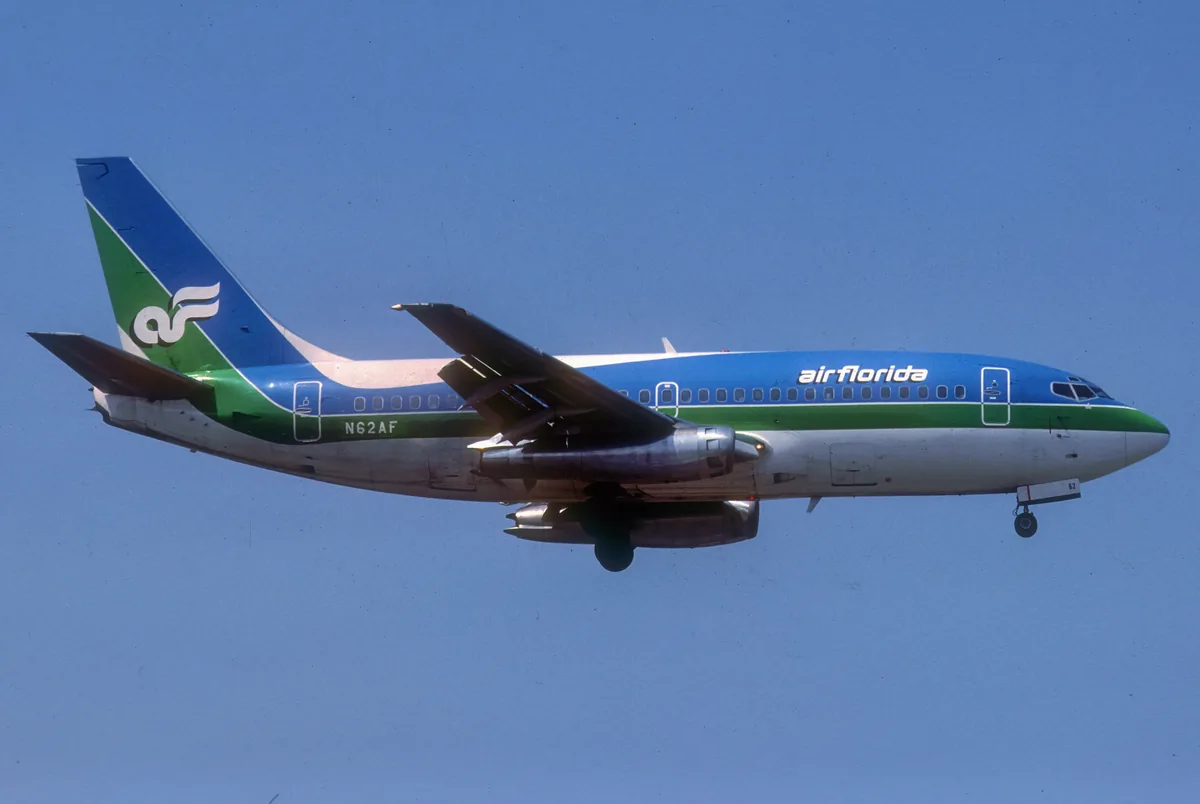
A Boeing 737-222, N62AF, departed runway 36 at Washington National Airport in snow. According to NTSB report AAR-82-08, it struck the 14th Street Bridge at 1601 eastern standard time and came to rest in the Potomac River. Of the 79 people aboard, 70 passengers and 4 crewmembers were killed; 4 people in vehicles on the bridge were also killed.
The cockpit voice recorder (CVR) excerpts in the report (pp. 3-5) include the following during the takeoff roll:
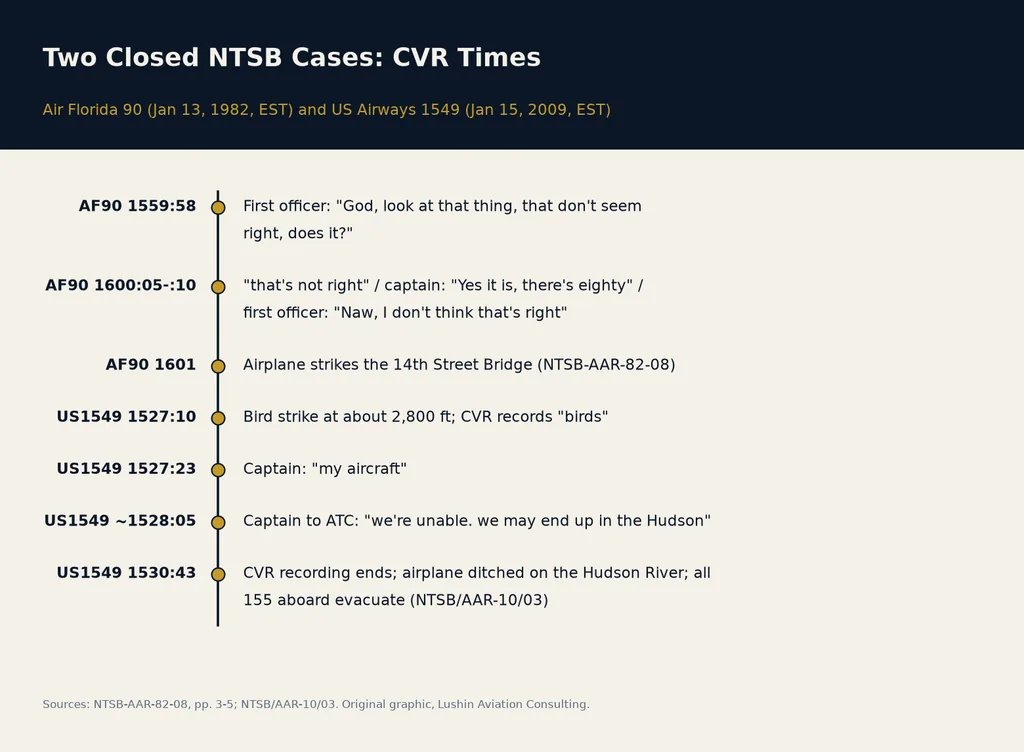
- 1559:58, first officer: “God, look at that thing, that don’t seem right, does it?”
- First officer: “...that’s not right...”; captain: “Yes it is, there’s eighty”; first officer: “Naw, I don’t think that’s right.”
- About 9 seconds later the first officer said “...maybe it is,” and, after the captain called “hundred and twenty,” “I don’t know.”
In its analysis, the NTSB wrote (p. 65): “An observation that something is not right is sufficient reason to reject a takeoff without further analysis,” and that “there are no comments on the CVR to indicate that the captain ever considered rejecting the takeoff.” On p. 67 the Board wrote that “the captain did not react to the first officer’s repeated comments that something was not right during the takeoff roll.”
The NTSB determined the probable cause to be “the flightcrew’s failure to use engine anti-ice during ground operation and takeoff, their decision to take off with snow/ice on the airfoil surfaces of the aircraft, and the captain’s failure to reject the takeoff during the early stage when his attention was called to anomalous engine instrument readings.” The Board also listed contributing factors, including the ground delay between deicing and takeoff clearance and the flightcrew’s limited experience in jet transport winter operations.
US Airways Flight 1549 (January 15, 2009)
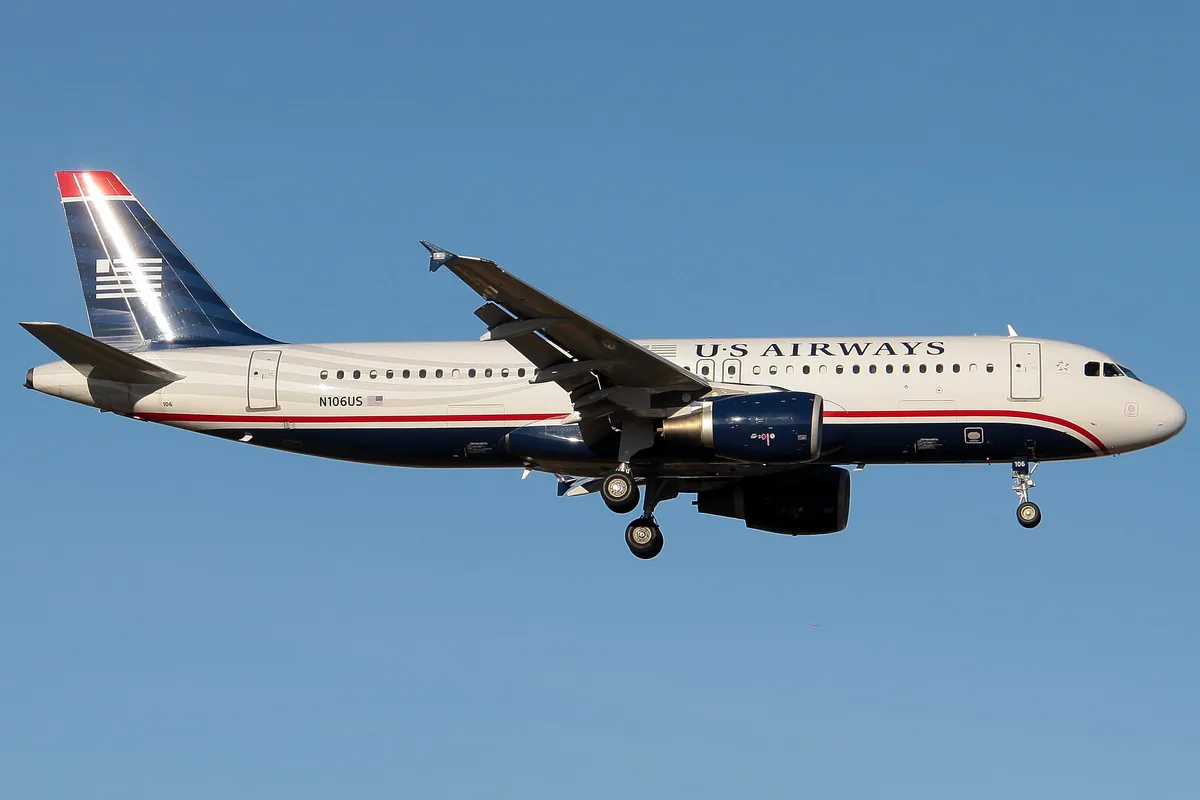
An Airbus A320-214, N106US, struck a flock of birds at 2,818 feet above ground level after departing LaGuardia Airport and lost almost all thrust in both engines. According to NTSB report AAR-10/03, CVR times (eastern standard time) include:
- 1527:10, captain: “birds.”
- 1527:23, captain: “my aircraft.”
- About 1528:05, captain to air traffic control: “we’re unable. we may end up in the Hudson.”
The airplane was ditched on the Hudson River about 8.5 miles from LaGuardia. The 150 passengers and 5 crewmembers evacuated; one flight attendant and four passengers were seriously injured.
The NTSB concluded (§ 2.3.2, pp. 88-89; Finding 15) that “the captain’s decision to ditch on the Hudson River rather than attempting to land at an airport provided the highest probability that the accident would be survivable.” The NTSB listed among factors contributing to survivability “the decision-making of the flight crewmembers and their crew resource management during the accident sequence.”
The NTSB determined the probable cause to be “the ingestion of large birds into each engine, which resulted in an almost total loss of thrust in both engines and the subsequent ditching on the Hudson River.” Among the factors the Board listed as contributing to fuselage damage was “the captain’s resulting difficulty maintaining his intended airspeed on final approach due to the task saturation resulting from the emergency situation.”
CVR times in both investigations
Next week: Assertiveness.
View the Week 2 carousel on LinkedIn →
Sources
- COMNAVAIRFORINST 1542.7E (December 23, 2024), Enclosure (2), para. 4.a. Naval Safety Command (PDF)
- FAA, Pilot’s Handbook of Aeronautical Knowledge, FAA-H-8083-25B, Chapter 2. FAA
- FAA, Advisory Circular 120-51E, Appendix 1. FAA (PDF)
- NTSB, Aircraft Accident Report NTSB-AAR-82-08, Air Florida, Inc., Boeing 737-222, N62AF, Collision with 14th Street Bridge, Near Washington National Airport, January 13, 1982. NTSB (PDF)
- NTSB, Aircraft Accident Report NTSB/AAR-10/03, Loss of Thrust in Both Engines After Encountering a Flock of Birds and Subsequent Ditching on the Hudson River, US Airways Flight 1549, Airbus A320-214, N106US, January 15, 2009. NTSB (PDF)